

There are 6 major experiences and understandings feeding into the public participation aspect of “For all Earthkind”.
1. The Concert for the Planet– Earth Hour
In 2015 I became involved with the Global Orchestra, working with Charlie Chan and Justin Baird to produce the inaugural “Concert for the Planet” for Earth Hour in 2015 (then again in 2018)
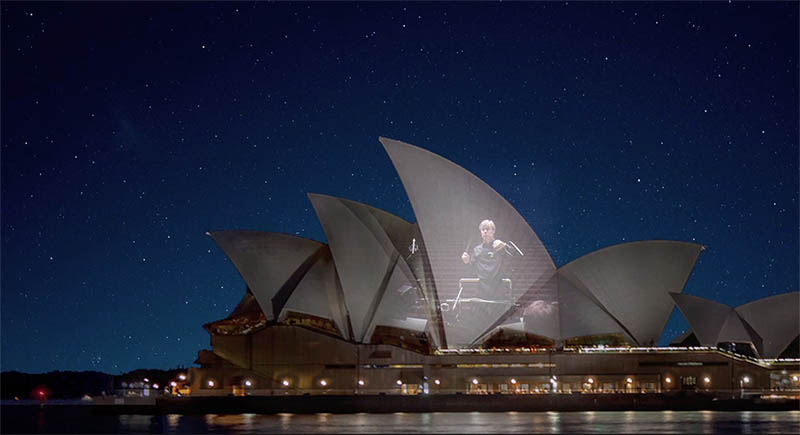
Led by a live stream “conductor-cam” of chief conductor David Robertson and the Sydney Symphony Orchestra at the Sydney Opera House, 80 communities and music groups across Australia as well as the NASA Rocket Scientists Orchestra in Virginia USA, participated in a simultaneous performance of Holst’s “The Planets”, during Earth Hour.
Our catch phrase "What part will you play for the planet?"
We developed a community and school outreach program that not only made the music accessible to a great number of players, it gave advice on how to conduct an event and how to use the process to reflect on what they could do to be more environmentally sustainable as a community.
It was inspiring to see how each community created their own occasion around performing in the Concert for the Planet. Some would have talks with their environmental officer, others hosted additional performances by their community before hand. They made it their own. Playing along with the Sydney Symphony gave communities a positive reason to come together and consider what they can do to reduce their impact on the planet.
Watch NASA’s summary video about this event.
CLICK HERE to watch the CFP promo.

2. Live Songwriting Sing-a-long Radio Show
In 2006-7 I was the guest singer-song writer in residence at ABC Radio . I devised a Live Songwriting Sing-a-long segment that I co- hosted with Trevor Chapel on Radio National- Overnights program.
Each session I would present listeners with a template for a song. It would have a hook line or Chorus we could all sing together, a simple verse melody and sometimes a genre or theme. We’d spend a bit of time introducing the tune, chatting and playing pre-written example verses and then open it up to listeners who would call in with their own lyrics that they would sing as I accompanied them on guitar. It was always so lovely to hear people’s voices and ideas, sometimes incredibly heart felt, sometimes witty or philosophical. It was always a joy to sing the chorus together and share the experience with such a huge cross section of the Australian community tuning in at 2 am… taxi drivers, shift workers, breast feeding mothers, insomniacs, truckies, studying students…and so on. The willingness to participate was heart warming, people just need to be given an inviting platform.
3: The Folkets Hus och Parken – a nationwide network of cultural spaces.

Around 2012 I learnt of a cultural infrastructure in Sweden called Folkets Hus och Parken. A nationwide network of more than 500 meeting places for culture, education and arts groups. Its origins stem way back to 1893 and has evolved with the social and technological changes of the times into its current form in 2000 integrating live digital streaming technology into the mix.
The internet actually bringing people physically together, in a shared space for a cultural experience in their local community!
The internet actually bringing people physically together, in a shared space for a cultural experience in their local community!
Most people are familiar with the National Theatre live event cinema streamed from Britain. Folkets Hus och Parken offers a similar experience but with a much broader and diverse array of live cultural offerings in its Live Pa Bio program including music, opera and ballet. With the program often live, it is streamed simultaneously in all their venues, so effectively they would have a multi-location live audience across all of Sweden for a single event.
In Australia we have the tyranny of distance which limits access to cultural experiences. I became excited by the vision of being able to broadcast live events, for example a night of the Garma Festival, or main stage line up the Woodford Folk Festival or a Bell Shakespeare production from the Opera House, to multiple live audiences of people gathered in spaces across the country.
Folkets Hus och Parken has much more to it than just the live event Cinema program. Behind its rich cultural offerings and inclusive organisational principles is a clear mission:
To create democratic meeting places to enable society-improving events that can help create a more reasonable world.
What’s not to love about that?
4. Homo- Aestheticus– An evolutionary theory of the arts
I had the pleasure of meeting and subsequently hosting Ellen Dissanayake when she visited Australia to share her work around the evolutionary purpose of the arts. I could wax lyrical on the subject and her theories but for now I will detail only the most relevant part of her work to this project.
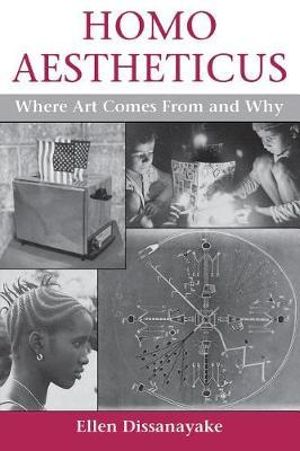
She supports the notion that music is a universal language that translates across kinship and tribal lines. It enabled modern humans to feel more cohesive. It enabled humans to develop a deeper compassion and connection to one another. What’s more it eases our anxiety- an anxiety born from our complex ability to reflect on past incidents, bring them into our present thinking and then project on the possible future outcomes. The obvious extension of this mind power is to then try and influence those future outcomes to be favourable.
Music has accompanied all our rites and rituals, appeals to the gods and to the elements for favourable outcomes forever and until this day. More rain, bountiful crops, fertility, good marriage etc. Participation in these rituals increased a sense of shared values and actually physically eases our anxiety. By organising ourselves rhythmically and sonically, even in how we adorn ourselves, we are expressing agency of our own bodies and our circumstances powerfully in that moment. By singing and dancing in unison our fears and anxiety transforms into a thing of beauty and a feeling of hope… even joy. We are deeply wired to respond to these music based forms of expressions. Modern science backs this up and has shown that when we engage in coordinated singing or dancing, especially in a group, we release Oxytocin- loosely labeled the bonding hormone that is most prevalent between infant and mother at child birth and breast feeding.
Via art, experience is heightened, elevated, made more memorable and significant
-Ellen Dissanayake
So, as humanity faces it greatest challenge yet, where we need to find cohesion on the most extraordinary level, we need to draw upon all our resources to usher in major changes around the way we live on this planet. Music will necessarily play a leading role to guide our many and varied complex consciousnesses through this period of extreme and deliberate flux.
5. Sand Talk– How indigenous thinking can save the world
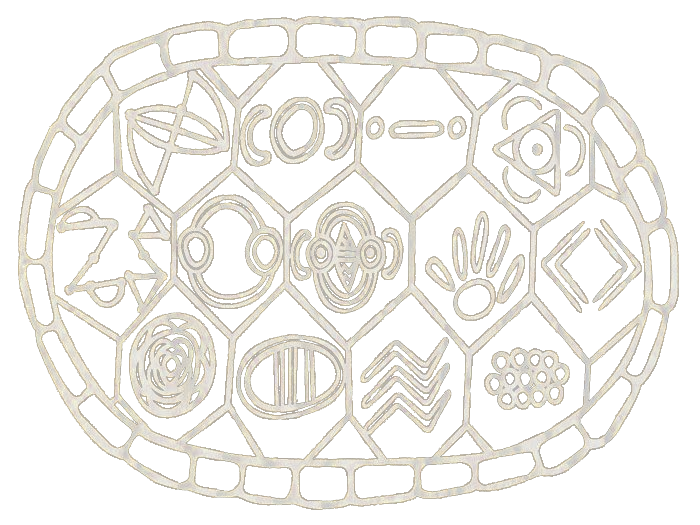
Tyson Yunkaporta’s book is a transformative read. He takes the reader on a journey into indigenous Australian awareness and systems of knowledge keeping and sharing. He shows how the impermanence of life is deeply enacted in all exchanges, reinforced and revered.
“The Future survival of all life on this planet will be dependent on humans being able to perceive and be the custodians of the patterns of creation again.” - Tyson Yunkaporta
One begins to appreciate how the ‘written word’ has dominated other cultures, accidentally saddling us with the illusion that we can achieve immortality or permanence. The root of the widespread disconnection from nature is this need to control. Tyson describes the Indigenous Australian way of being and seeing that is all about interconnectivity not dominance, and is in no small way, been the foundational principle that makes Indigenous Australians the longest continuous human culture on the planet, and key stone to all of humanities future survival.
Ellens book and Tyson’s work intersects in both describing how art practice is more than just an ornament or garnish- but a deeply engrained human behaviour that gives shape and form to our meaning making minds in a more wholistic way.
6. Greek Amphitheatre and the birth of Democracy
In 2017 much of all of the above came together in my mind as we were travelling through Greece taking in the historical sites fuelled by my partner Bob’s deep knowledge of Ancient Greek democracy.
As we travelled from site to site envisioning these people and their desire to find a new, less tyrannical, more equitable way to govern themselves, the presence of the amphitheatre became ubiquitous in this journey. Having studied Greek theatre in my Arts degree, this distant knowledge suddenly re-emerged in situ. Not only were these theatres places for political debate and collective decision making, they were also places for art- for plays. These performances bought Greeks together, to reflect on their humanity, interpret and question the politics of the day. The plays were tragic, satirical, moving and funny, both both entertaining and thought provoking.
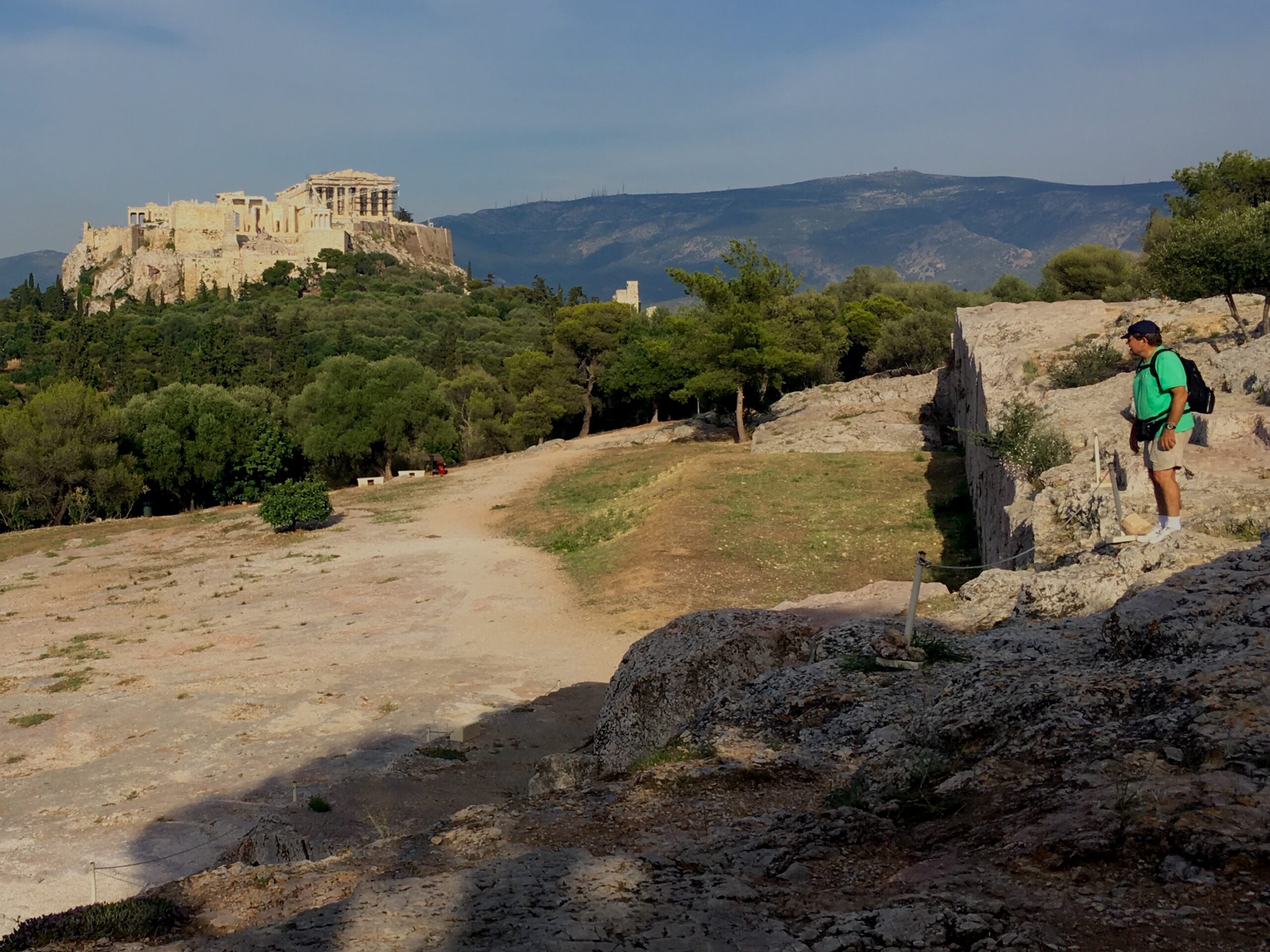
Along with the Pynx and Agora, these deliberate public spaces allowed differences to be considered, shared futures to be contemplated, decisions to be made. They concentrated the mind of the demos around the responsibility of citizenship.


And so on…
There are lots of other books and experiences that further deepen the revelations and foundational thinking of the above highlighted 6.
 For all Earthkind